Living in Singapore · Food · 5 min
How spicy is food in Singapore: a guide for Mexican palates
"Spicy" in Singapore does not always mean the same as "picoso" in Mexico. Which dishes are hot and which are not.
Updated Sep 24, 2026
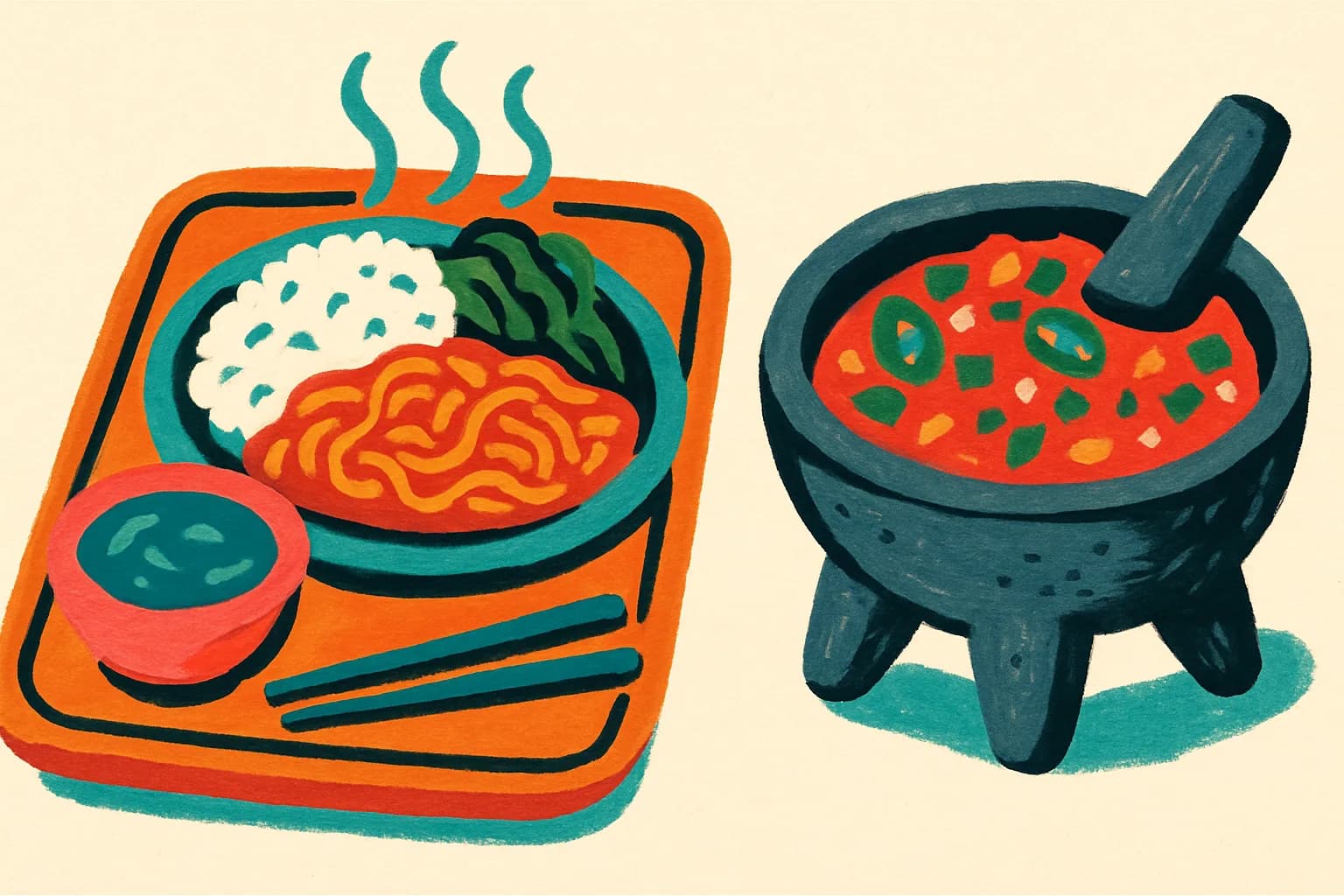
Mexican heat and Southeast Asian heat are not the same kind of spicy, which creates surprises in both directions: dishes that sound harmless but hit hard, and others labelled "spicy" that taste mild to a Mexican palate. What follows is based on the experience of people who cook and eat here, not an official scale.
Why they feel different
Mexican food usually builds heat on dried and fresh chillies with their own distinct flavour (guajillo, chipotle, serrano), often woven into the whole dish. In Singapore, much of the heat comes from chilli padi (bird's eye chilli) or sambal pastes, which hit faster and sharper, but with less flavour complexity behind them.
The dishes that are hot
Watch out for these
- Sambal: the chilli paste served with many Malay and Indonesian dishes; a small spoonful can be enough.
- Laksa: the broth itself already carries heat, not just as an optional add-on.
- Mala (Sichuan food): combines heat with a distinctive numbing sensation; there is nothing quite like it in Mexican cooking.
- "Hot" Indian curry: when an Indian menu marks a curry as spicy, it usually is.
How to order the right level
At hawker centres and casual restaurants, these phrases work well: "not spicy" or "no chilli" if you would rather avoid it entirely; "a little spicy" for a middle ground; and if you genuinely want real heat, asking for "extra chilli" or "very spicy" usually gets an amused, surprised reaction from the vendor. It is not the usual request.
Visible fresh chilli is no guarantee
A dish with visible fresh chilli is not necessarily very hot. Many preparations use it more for colour and aroma than for real heat. Ask rather than assume from appearance.
Take the next step
Connect this reading with a community space, an activity or membership.